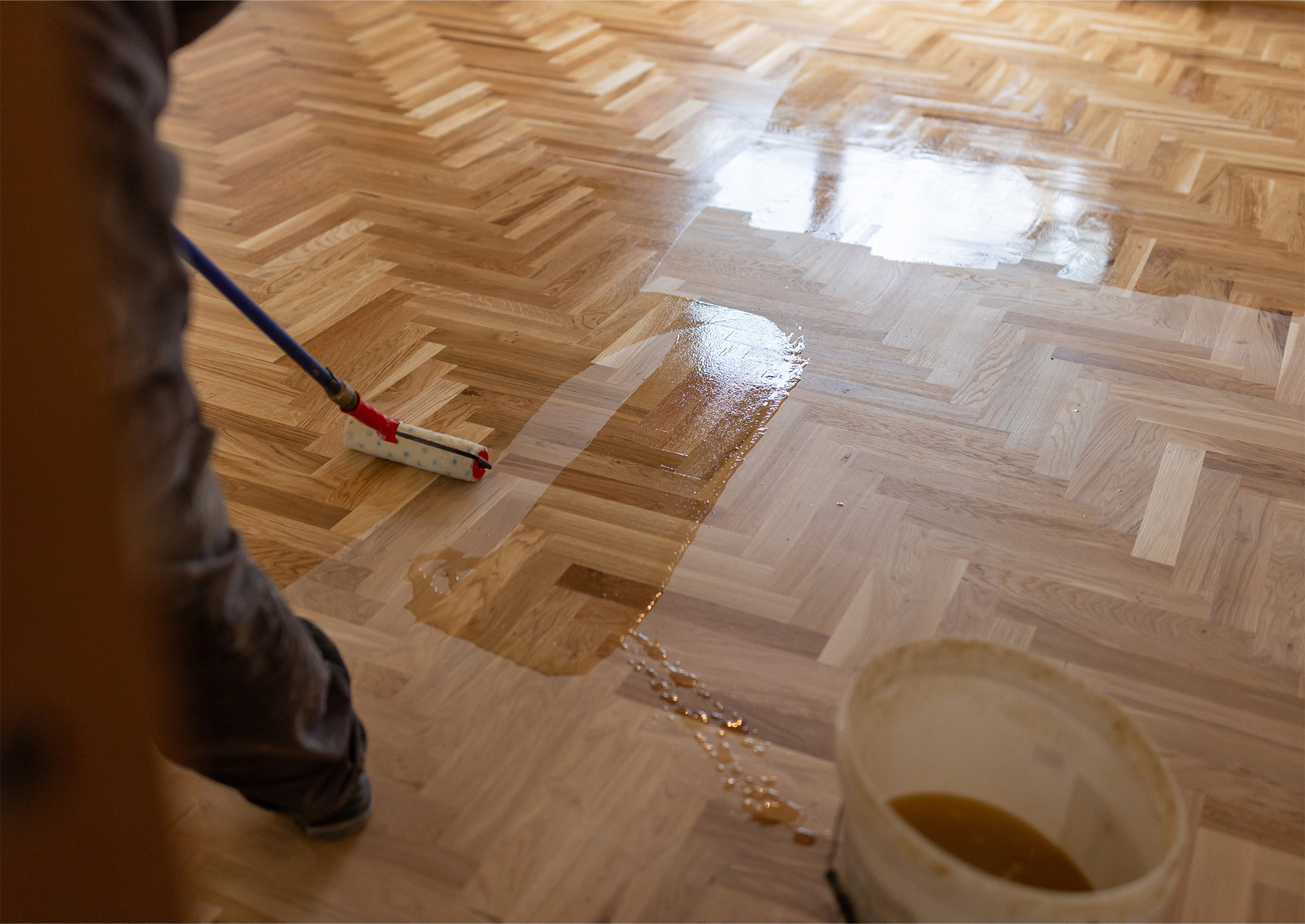
For decades, polyurethane has been the default finish for hardwood flooring, prized for its glossy protection and easy maintenance. In recent years, high-end residential and commercial projects have increasingly looked toward oil based and hardwax oil finishes instead. The appeal comes down to how each finish interacts with the wood itself, and what that means for the final look and feel of a floor.
Polyurethane forms a film on top of the wood. It seals the surface completely, which protects against moisture and wear, but it also creates a layer between the eye and the grain. Oil based finishes, including hardwax oil, work differently. They penetrate into the wood fibers rather than sitting on top, which means more of the natural texture and grain stays visible and touchable underfoot.
Why Texture Matters On A Custom Floor
Designers working on premium builds are often chasing a specific tactile quality, not just a visual one. A floor finished with an oil based coating retains more of the slight variation in grain depth that gives European oak its character, compared to a floor sealed under a heavier film finish. Clients notice this in a way that photographs rarely capture, especially in natural light.
This is part of why oil based and hardwax oil finishes have become closely associated with contemporary European design. The lower sheen reads as intentional and understated rather than manufactured, which suits interiors built around natural materials and quiet luxury rather than high shine surfaces.
Repair And Maintenance Differences
One of the most practical advantages of an oil based finish is spot repair. If a section of floor gets scratched or worn, that area can often be sanded and re oiled without touching the rest of the room. A pure film forming polyurethane finish does not allow for this as easily, since a damaged section usually means resanding and recoating a much larger area to avoid visible patchwork.
For commercial spaces and busy households, this difference matters over the life of the floor. Oil based finishes typically call for more routine maintenance, often a light reapplication every few years depending on traffic, but that maintenance tends to be simple and localized. It also means a floor can age gracefully instead of needing a full overhaul the moment wear starts to show.
What This Means When Specifying A Custom Floor
For architects and designers, the choice of finish should be part of the earliest project conversations, not an afterthought once the flooring is already ordered. A pre-finished floor needs its coating applied and properly cured at the point of manufacture, since that process behaves differently than a finish applied on site.
At Urban Plank, custom color matching and finish work happen at the manufacturing stage, using our proprietary hybrid coating, built on 50+ years of combined hardwood expertise on our team, that combines the natural look of oil with the durability of urethane. This gives designers more control over the final result before the floor ever reaches the job site, and is especially useful on projects where a specific aged or richly toned look is part of the design intent, since the right finish formulation takes those treatments more predictably than a standard film coating would.
If you are specifying flooring for a project across Holland, Grand Rapids, Grand Haven, Traverse City, and Harbor Springs, MI, our team can walk through finish options and how they will perform for your specific space. We work directly with architects, designers, and builders on custom pre-finished flooring, with full support from Holland, MI. Contact us to discuss finish options for your next build.