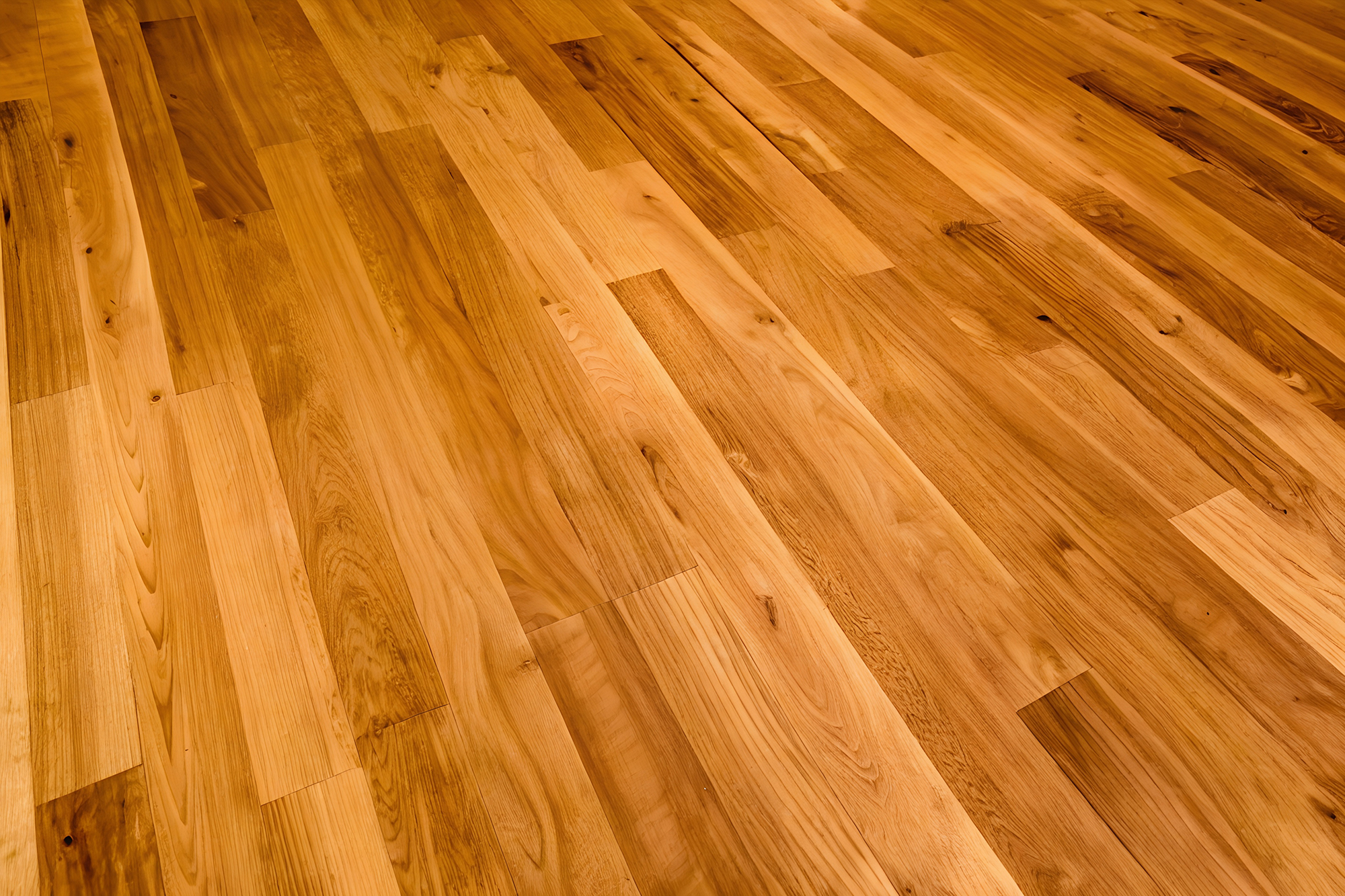
Nearly every article on European oak mentions that it produces wider planks than many American hardwoods, but almost none explain why, beyond a vague reference to the trees growing taller. The real answer has as much to do with how European forests are managed as it does with the biology of the tree itself, and understanding that distinction actually matters for anyone trying to evaluate why wide plank supply is more consistent from European sources.
Much of Europe's oak comes from forests managed under close canopy silviculture, where trees are grown densely together and competition for light encourages them to grow tall and straight with minimal low branching before reaching the canopy. An American oak grown in a more open, less densely planted setting tends to branch out lower on the trunk, since it faces less competition for light near the ground. Lower branching means more knots and stress points lower on the trunk, which directly limits how wide and how clear a board a mill can cut from that section of the log.
Rotation Age And Trunk Diameter
European oak grown for flooring is also typically harvested at a longer rotation age than many commercial hardwood operations elsewhere, often well past a century of growth. A longer rotation age means a larger trunk diameter by the time the tree is harvested, which directly increases the maximum board width a mill can cut, since plank width is fundamentally limited by how much clear, knot free diameter exists in the log.
This is a genuine tradeoff in forestry economics. Faster rotation cycles produce more volume more quickly but yield narrower, more knot prone material, while the slower growth cycles common in traditional European oak forestry produce less volume per acre but consistently wider, cleaner material. The wide plank reputation European oak has built is really a byproduct of this slower, more patient forestry approach rather than something inherent to the species that could not exist elsewhere.
How This Affects Milling Yield
Wider clear diameter does more than allow for wider boards. It also improves milling yield efficiency, since a wider log produces proportionally more usable face veneer per cut with less waste at the edges compared to a narrower log being pushed to its width limit. This is part of why wide plank European oak, despite the added production complexity of engineered construction, remains commercially viable at the widths it comes in, since the raw material itself is more efficient to process into usable board width.
Quarter sawing versus flat sawing also plays into this. Quarter sawn boards, cut radially from the log, tend to be narrower per cut than flat sawn boards but show more stable dimensional behavior and the pronounced medullary ray pattern European oak is known for. A mill working with a wider diameter log has more flexibility to offer both wide flat sawn boards and true quarter sawn options from the same source material, which narrower diameter logs simply cannot support.
What This Means For A Sourcing Decision
Understanding this forestry background clarifies why wide plank European oak supply has stayed relatively consistent even as demand has grown, since it reflects decades of forest management decisions rather than a trend that mills can simply scale up on demand. It also explains why wide plank options in other species can be harder to source consistently, since replicating this outcome requires the same patient, close canopy growing conditions over a comparable timeframe.
This is useful context for architects and designers explaining material choices to clients, since it grounds the wide plank conversation in actual forestry practice rather than marketing language about tree height alone.
Sourcing Wide Plank European Oak With Confidence
At Urban Plank, our European oak is sourced with attention to grain, diameter, and cut method, so the wide plank product we manufacture reflects the material's genuine structural advantages.
If you are specifying wide plank European oak for a project across Holland, Grand Rapids, Grand Haven, Traverse City, and Harbor Springs, MI, our team can walk through width options and cut methods available for your build. Explore European oak crafted for high-end builds across West Michigan or contact us to talk through your project, with full support available from Holland, MI.