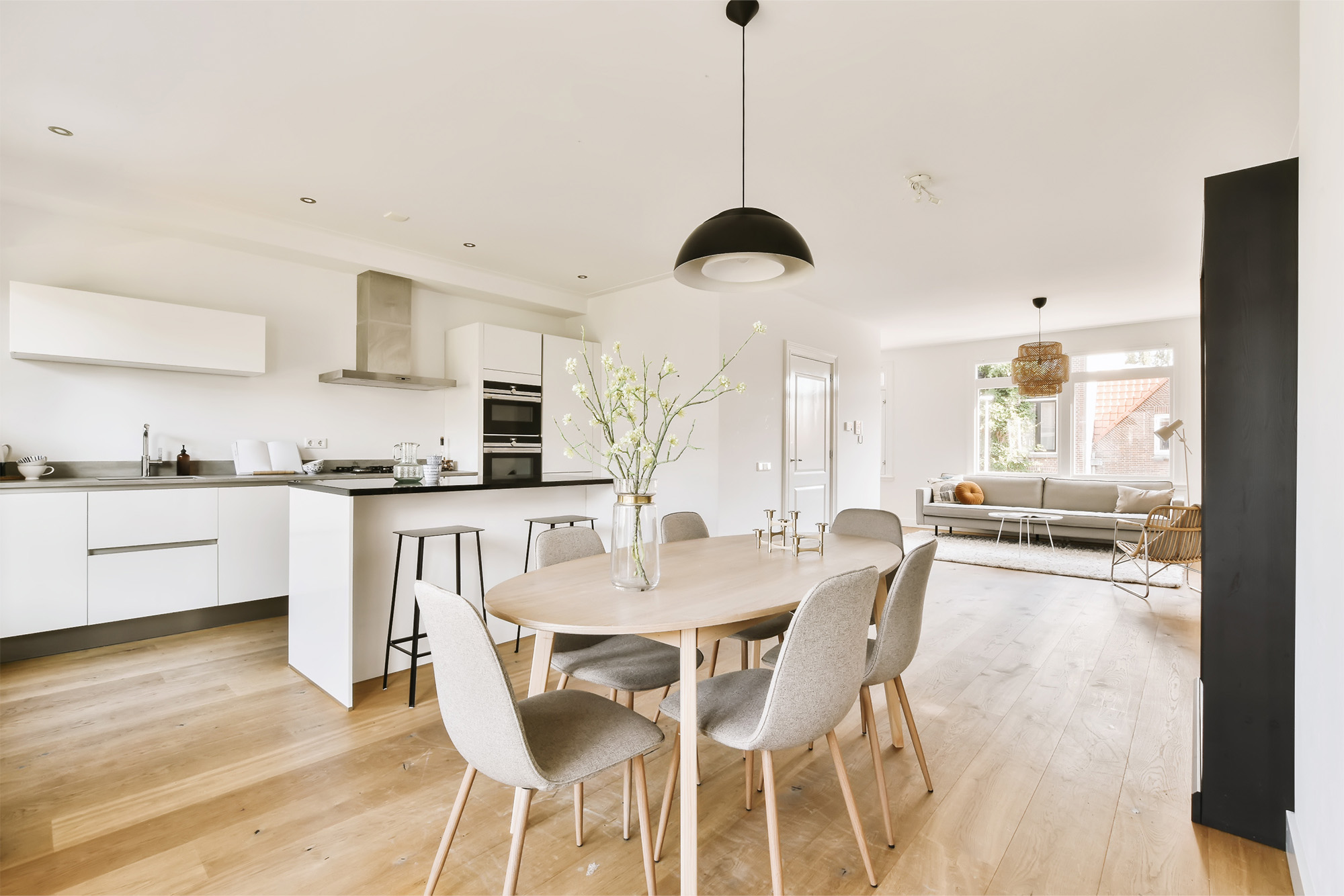
Scandinavian style has held steady as one of the most requested interior directions for years, and hardwood flooring plays a bigger role in achieving that look than many people expect. The style leans on light, low contrast surfaces throughout a space, and the floor is often the largest surface area in the room, which means tone and width decisions carry real weight in whether a space actually reads as Scandinavian or simply as light colored.
Plank width is one of the first decisions worth getting right. Wider planks tend to suit the style better than narrow strip flooring, since fewer seams across the floor supports the clean, uncluttered visual language Scandinavian design is known for. This does not mean extremely wide planks are required, but something in the mid to wide range generally reads more in line with the aesthetic than a tight, busy pattern would.
Tone Selection For A Scandinavian Look
Scandinavian interiors typically favor pale, low saturation tones with minimal red or orange undertone, often described as ash blonde, whitewashed, or soft natural. The goal is a tone that feels quiet rather than one that draws attention to itself, which lets furniture, textiles, and architectural details carry more of the visual interest in the room.
This is a case where undertone matters more than the tone name on a sample card. Two floors both labeled as light natural can lean noticeably warm or cool depending on the species and finish, and a warmer undertone can pull a space away from the Scandinavian look even if the overall lightness is correct. Reviewing samples in natural daylight, rather than under warm interior lighting, gives a truer read on undertone.
Finish And Texture Considerations
A matte or low sheen finish generally supports the Scandinavian aesthetic better than a high gloss surface, since the style favors understated, natural looking materials over anything that reads as polished or formal. A finish that lets the wood's natural texture come through, rather than sitting as a heavy film on top, tends to reinforce the pared back feel the style is built around.
Grain pattern is worth considering too. A straighter, more consistent grain generally supports the clean Scandinavian look better than a heavily varied, character rich grain, though this comes down to the specific project and how much texture a designer wants to bring into an otherwise minimal space.
Specifying For The Full Room
Because Scandinavian interiors rely on a cohesive, quiet palette, the flooring tone needs to be considered alongside walls, cabinetry, and trim rather than in isolation. A tone that reads perfectly pale on its own can look mismatched next to a cooler or warmer white on the walls, so pulling those samples together before finalizing a spec is worth the extra step.
At Urban Plank, we work with designers to land on a tone and width that holds up against the rest of a room's palette, with custom color matching available when a stock option does not quite hit the mark.
If you are specifying flooring for a Scandinavian style project across Holland, Grand Rapids, Grand Haven, Traverse City, and Harbor Springs, MI, our team can help you land on the right tone and width for the space. Browse Premium European Oak Flooring or contact us to talk through your next project, with full support available from Holland, MI.