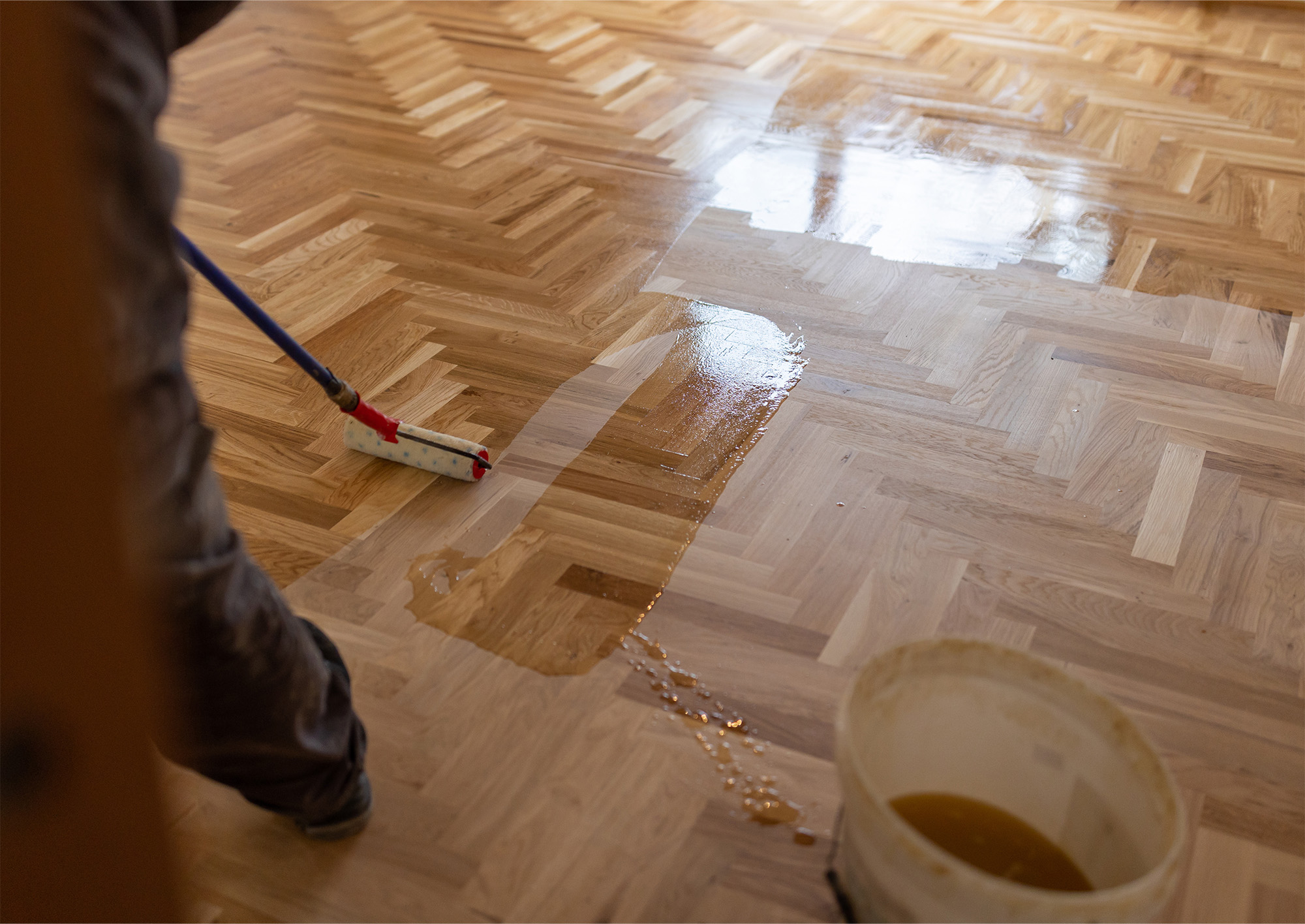
For decades, polyurethane was the default finish for hardwood flooring, prized for its glossy protection and easy maintenance. But on high-end residential and commercial projects, designers are increasingly steering away from it in favor of hardwax oil. The shift comes down to how each finish interacts with the wood itself, and what that means for the final look and feel of a floor.
Polyurethane forms a film on top of the wood. It seals the surface completely, which protects against moisture and wear, but it also creates a layer between the eye and the grain. Hardwax oil works differently. It penetrates into the wood fibers rather than sitting on top, which means the natural texture of the grain stays visible and touchable underfoot.
Why Texture Matters On A Custom Floor
Designers working on premium builds are often chasing a specific tactile quality, not just a visual one. A floor finished with hardwax oil retains the slight variation in grain depth that gives European oak its character. Clients notice this in a way that photographs rarely capture, especially in natural light.
This is part of why hardwax oil has become closely associated with contemporary European design. The matte, low sheen finish reads as intentional and understated rather than manufactured, which suits interiors built around natural materials and quiet luxury rather than high shine surfaces.
Repair And Maintenance Differences
One of the most practical advantages of hardwax oil is spot repair. If a section of floor gets scratched or worn, that area can be sanded and re oiled without touching the rest of the room. Polyurethane does not allow for this. A damaged section usually means resanding and recoating the entire floor to avoid visible patchwork.
For commercial spaces and busy households, this difference matters over the life of the floor. Hardwax oil requires more routine maintenance, typically a light reapplication every few years depending on traffic, but that maintenance is simple and localized. It also means a floor can age gracefully instead of needing a full overhaul the moment wear starts to show.
What This Means When Specifying A Custom Floor
For architects and designers, the choice between finishes should be part of the earlier conversations in a project, not an afterthought once the flooring is already ordered. Pre-finished hardwax oil floors need to be manufactured with that finish already applied and cured properly, since it behaves differently than a site applied polyurethane coat.
At Urban Plank, custom color matching and finish selection happen at the manufacturing stage, which gives designers more control over the final result before the floor ever reaches the job site. This is especially useful on projects where a specific aged or fumed look is part of the design intent, since hardwax oil takes those treatments more predictably than a film finish would.
If you are specifying flooring for a project across Holland, Grand Rapids, Grand Haven, Traverse City, and Harbor Springs, MI, our team can walk through finish options and how they will perform for your specific space. We work directly with architects, designers, and builders on custom pre-finished flooring, including full support from Holland, MI. Contact us to discuss finish options for your next build.